Welcome to the Local 4 Funds Office Wellbeing Hub.
We’re glad you’re here!
We’re glad you’re here!
“Your health is a reflection of your daily choices; make them count.”
– Unknown
2026 Local 4 Life $250 Incentive
Enroll with our health coaching partner, TrestleTree, in 2026 and complete five appointments by December 11, 2026, to earn a $250 gift card*. TrestleTree coaches will work with you to develop SMART goals to help you manage chronic health conditions, such as diabetes, high blood pressure, and asthma, or help you work on a healthy lifestyle, such as nutrition, weight management, tobacco cessation, and exercise. This program is available at no cost to those who are enrolled in the Local 4 Health & Welfare Plan and their dependents. Contact TrestleTree at 866-523-8185 or IUOE Local 4 | TrestleTree.
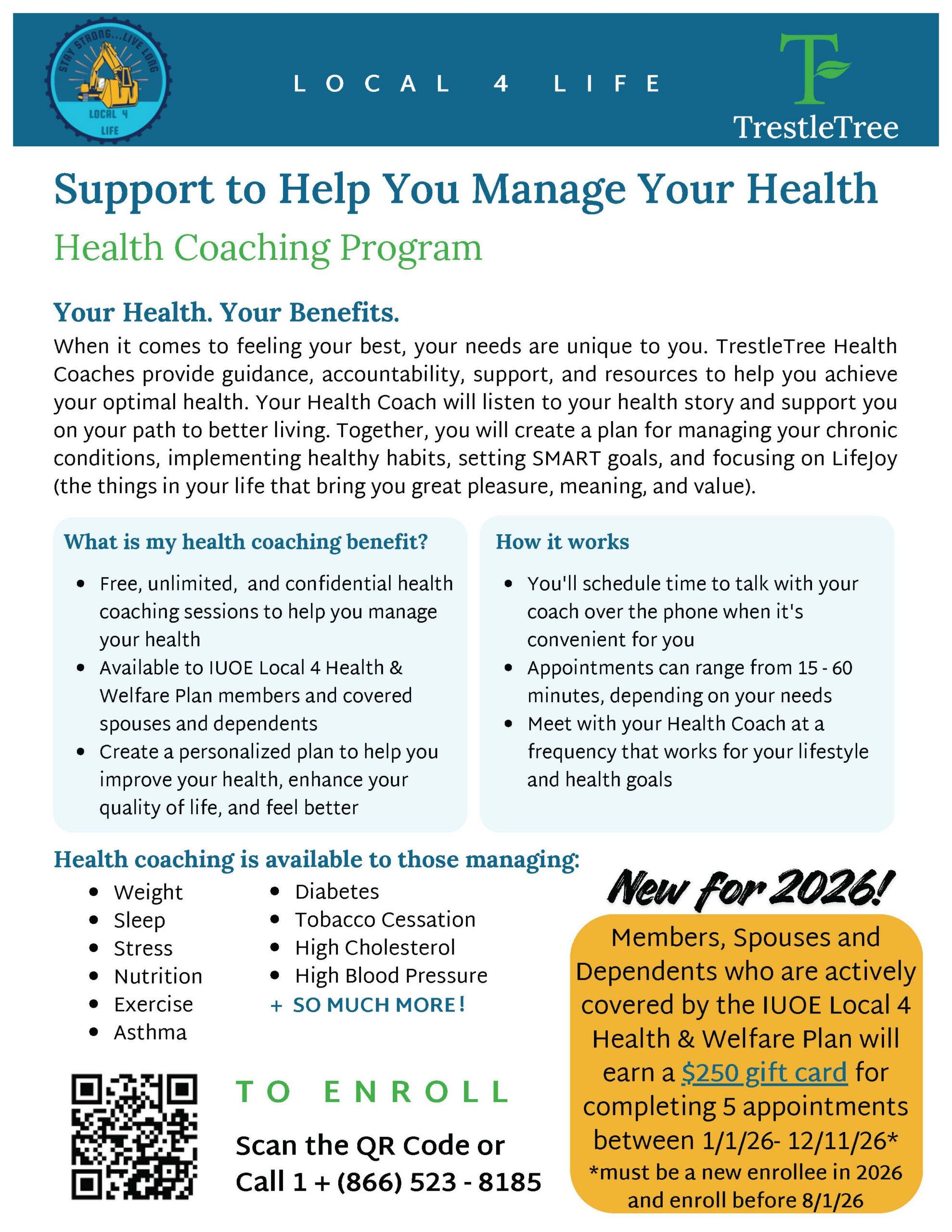
*Open to new enrollees in 2026, enrollment must be started by 8/1/26.
 Everyday Sun Protection Basics
Protecting yourself from the sun is important for preventing sunburn, premature skin aging, eye damage, and skin cancer. Now that we’re in the peak summer months, here’s a clear, practical guide you can use day to day. Follow these tips from Houston Methodist Hospital (What SPF Should You Use for Adequate Sun Protection?) and the Environmental Protection Agency (Ultraviolet (UV) Radiation and Sun Exposure | US EPA).
- Use Sunscreen Correctly
- SPF 30 or higher for daily use
- Choose a broad-spectrum sunscreen (protects against UVA & UVB)
- Use enough: about 1 ounce (a shot glass) for your whole body
- Use the “teaspoon rule” for how much to apply to each body part:
- 1 teaspoon to your face and neck
- 1 teaspoon on each arm
- 2 teaspoons to your front and back torso
- 2 teaspoons for each leg
- Reapply every 2 hours, and after swimming or sweating
- Wear Sun‑Protective Clothing
- Wide‑brimmed hats to protect face, ears, and neck
- Long sleeves and long pants when possible
- Darker, tightly woven fabrics block more UV than thin, light ones
- Protect Your Eyes
- Wear UV‑blocking sunglasses (look for “100% UV” or “UV400”)
- Wraparound styles give extra protection
- Seek Shade Strategically
- Sun rays are strongest between 10 a.m. and 4 p.m.
- Use umbrellas, trees, awnings, or canopies when outdoors, but these do not provide complete protection
- Remember: sand, water, and pavement reflect UV rays
Extra Tips That Often Get Missed
- UV exposure happens on cloudy days (up to 80% of UV still gets through)
- Watch the UV index when planning outdoor activities
- There’s no such thing as a “healthy tan”
Why Having Positive Connections with Family and Friends Supports Your Physical and Mental Health
Healthy connections with family and friends can enhance your sense of wellbeing. From when we are newborns, we seek out connection with others. When this is missing in our lives, it can lead to loneliness and feelings of isolation. According to the Centers for Disease Control (CDC), loneliness is a risk factor for many diseases, including heart disease, Type 2 diabetes, depression, and anxiety. Loneliness is common—the CDC reports that 1 in 3 people report feeling lonely, and 1 in 4 people report being socially isolated. The benefits of connections are clear. Having social relationships has been shown to reduce stress, improve sleep, and enhance longevity. Social networks provide a resource when you are facing difficult times and can help you work through problems. Positive social influences can help you develop healthy habits, including exercise, better nutrition, and sleep patterns.
As an adult, it is often challenging to make new friends or make time to enhance our relationships with old friends and family members. Investing in relationships is worth the effort. Consider doing things like joining an activity that you enjoy, such as a sporting league, art class, book club, or other event. Volunteering is a great way to meet people and give back to your community. Getting out in your neighborhood, like walking the dog or running, is a good way to connect with neighbors. Reaching out doesn’t have to be in-person; call or text family members and old friends to reconnect. While social media may be one way to reach out to connections, spending less time on our phones is generally better for our mental health. Many social media connections are superficial at best.
Our Employee Assistance Program, Lyra Health, can help you address feelings of loneliness and suggest ways to enhance your connection with others. In addition to therapy and coaching, Lyra offers a library of wellness resources. For more information, contact Lyra at 844-926-2482 or Lyra Health.
This Month’s Featured Partner
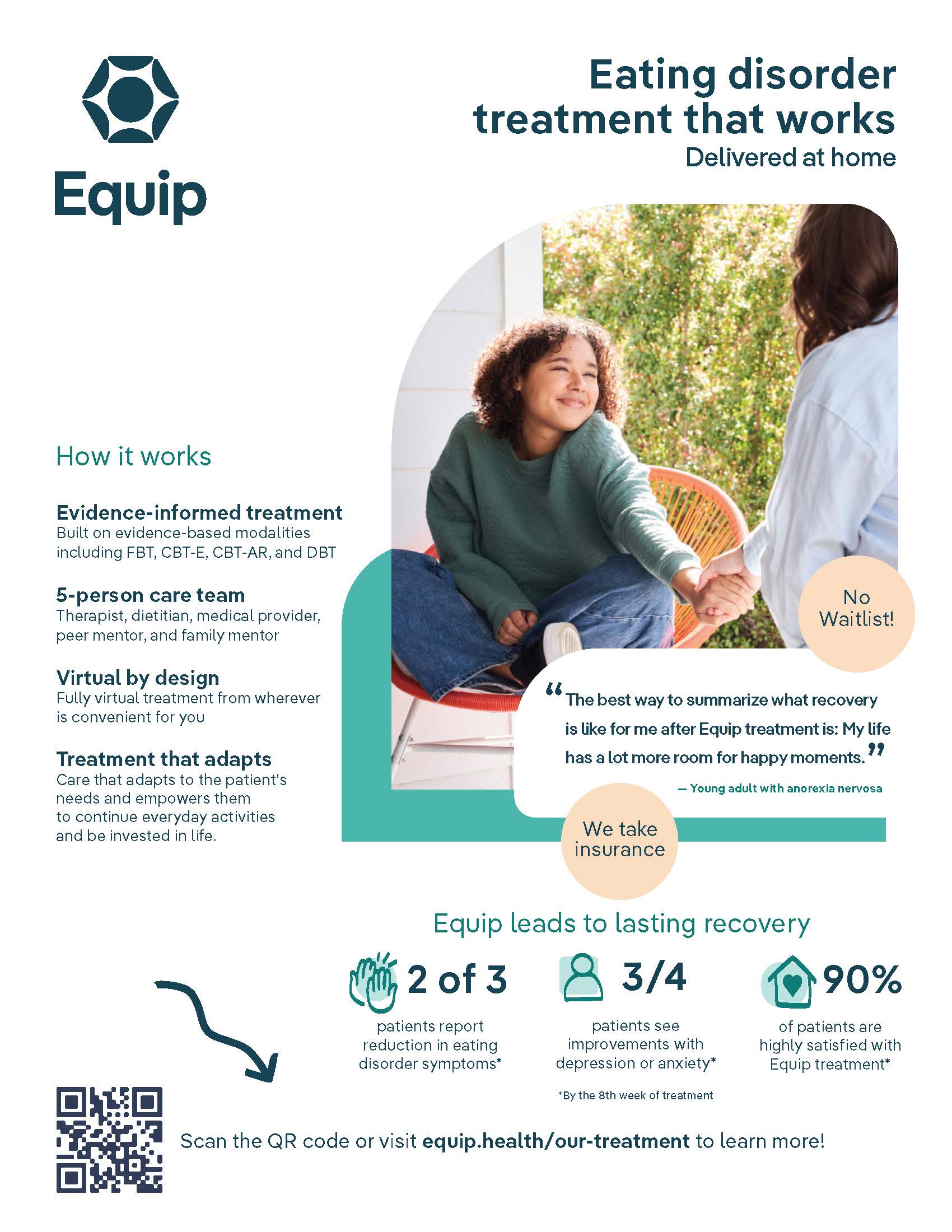
Eating Disorder Treatment with Equip Health
Equip Health provides treatment for all eating disorders for ages 5+. This virtual program is offered in all 50 states. Your treatment team consists of a therapist, dietician, peer mentor, medical provider, and family mentor. Equip provides individual and group therapy and intensive outpatient programs. Within 48 hours of a referral, the admissions team will contact you to begin the evaluation process. Even if you or your family member have not yet been diagnosed with an eating disorder, Equip can evaluate and admit you to their program, if appropriate. They offer a pre-admissions group for those who may be interested in Equip for themselves or a family member, or for those who have been admitted to Equip but have not started treatment. To register, click on Free Equip Informational Group. Equip Health is in-network with Blue Cross and Blue Shield of Massachusetts, copayments, deductibles, and co-insurance apply. For more information, see the attached flyer, their website (Equip Health – Virtual Eating Disorder Treatment), or call 866-938-3831.